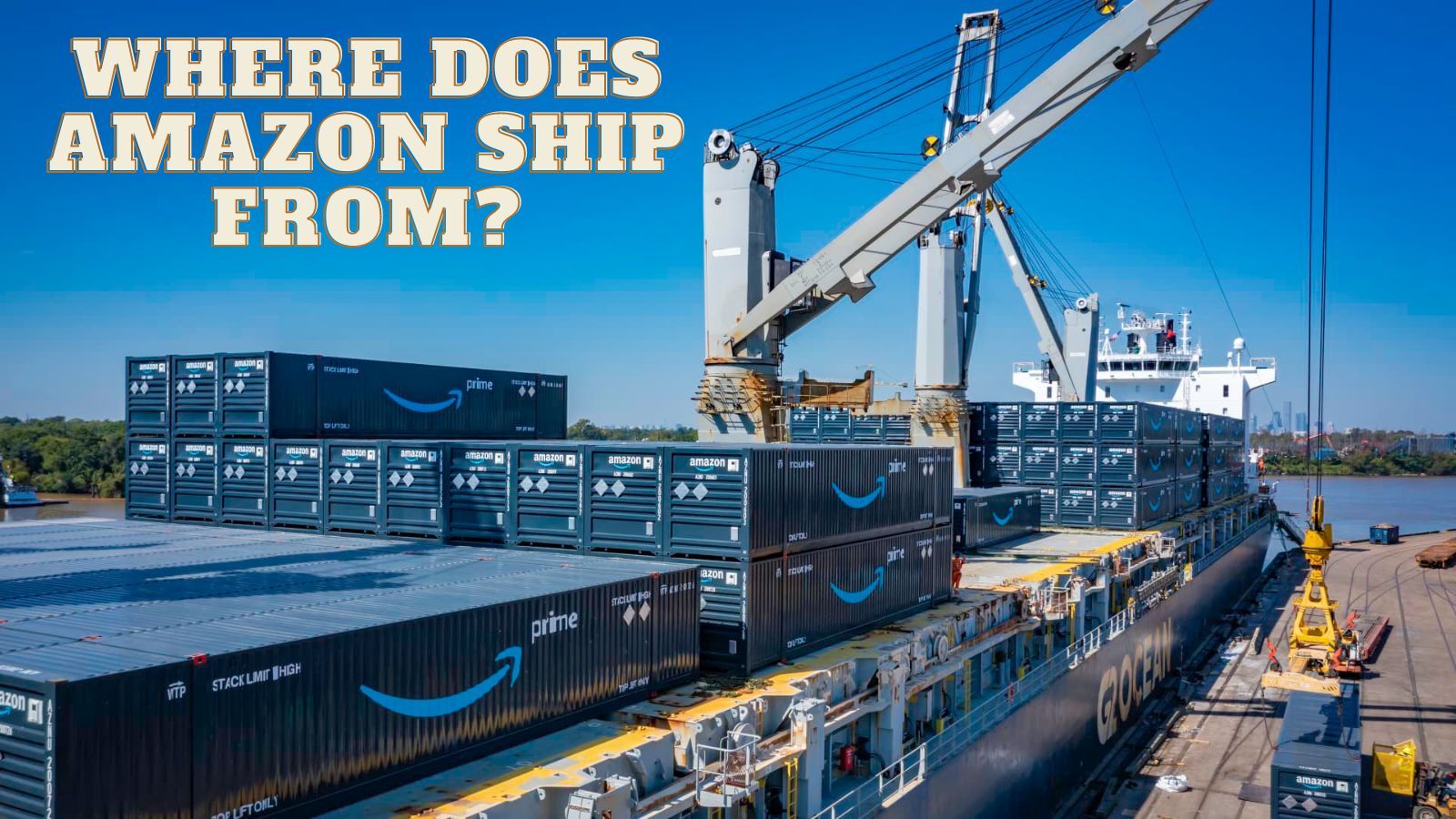
Amazon does not ship every order from one universal warehouse. Depending on the offer, your item may come from an Amazon fulfillment center, a third-party seller's own facility, or a vendor shipping on Amazon's behalf, based on Amazon's current FBA, FBM, and shipping documentation.
Table Of Contents
The two main shipping paths customers see
| Fulfillment path | What Amazon says | What that means for you |
|---|---|---|
| Fulfillment by Amazon (FBA) | Amazon stores and ships the product | The item is coming through Amazon's fulfillment network. |
| Fulfilled by Merchant (FBM) | The seller ships the product directly using Amazon tools | The item is coming from the seller's own operation, not Amazon storage. |
Amazon summarizes this plainly in its selling overview: sellers either use FBA, where Amazon stores and ships products, or FBM, where sellers ship directly.
What “Shipped by Amazon” usually means
Amazon's own seller education pages say that FBA lets sellers send inventory into Amazon's fulfillment network, where Amazon picks, packs, ships, handles customer service, and processes returns. Amazon also says that network includes hundreds of fulfillment centers worldwide on its FBA page.
On an offer-level explainer posted by Amazon staff in the Seller Forums, Amazon defines Shipped by Amazon as inventory the brand or manufacturer stocked in an Amazon fulfillment center for Amazon to ship to customers.
What “Shipped by the seller” means
If the offer is merchant fulfilled, the product ships from the seller's own warehouse, office, or other facility rather than Amazon's fulfillment network. Amazon's FBM page says sellers set their own handling and transit times and confirm shipments themselves, which is the clearest sign that the origin is seller-controlled.
What the “Sold by” line adds
The shipping line tells you who is dispatching the order. The Sold by line tells you who the retail seller is. In the same Amazon staff explainer in Seller Forums, Amazon says Sold by Amazon means Amazon bought the stock from the brand or manufacturer, while Sold by X means that outside seller is making the sale on Amazon.
Prime does not always mean Amazon owns the inventory
Customers often treat the Prime badge as shorthand for “Amazon item,” but Amazon's own FBM documentation says sellers who meet performance requirements may qualify for Seller Fulfilled Prime. That means an offer can carry Prime branding even when the seller, not Amazon, is the merchant behind the listing.
Can Amazon-sold items ship directly from a vendor?
Yes, at least in some cases. Amazon's shipping terminology documentation distinguishes between a retail procurement vendor, which ships inventory to Amazon fulfillment centers, and a direct fulfillment vendor, which ships orders to customers on Amazon's behalf after the customer buys from Amazon's retail website.
So the short version is: an Amazon sale does not always imply the same physical origin behind the scenes.
Why one order can come from more than one place
Amazon lets sellers use FBA, FBM, or a mix of both by product, as shown in its overview of shipping options. That means a multi-item order can easily contain items fulfilled in different ways, especially if you are buying from different sellers or mixing Amazon-sold and marketplace offers.
How to tell before you buy
- Check the Ships from line for who is physically dispatching the order.
- Check the Sold by line for who the merchant is.
- Do not assume the Prime badge means the item is sold by Amazon.
- If speed matters, compare delivery dates on each offer instead of assuming all offers on the same product page ship the same way.
Bottom line
Amazon ships from more than one kind of source. If it says Shipped by Amazon, the order is moving through Amazon's fulfillment network; if it says the seller ships it, the origin is seller-controlled; and some Amazon retail orders can also be shipped by vendors on Amazon's behalf. The fastest way to decode any listing is to read the Ships from and Sold by lines together.